HitMe! - Blackjack Game
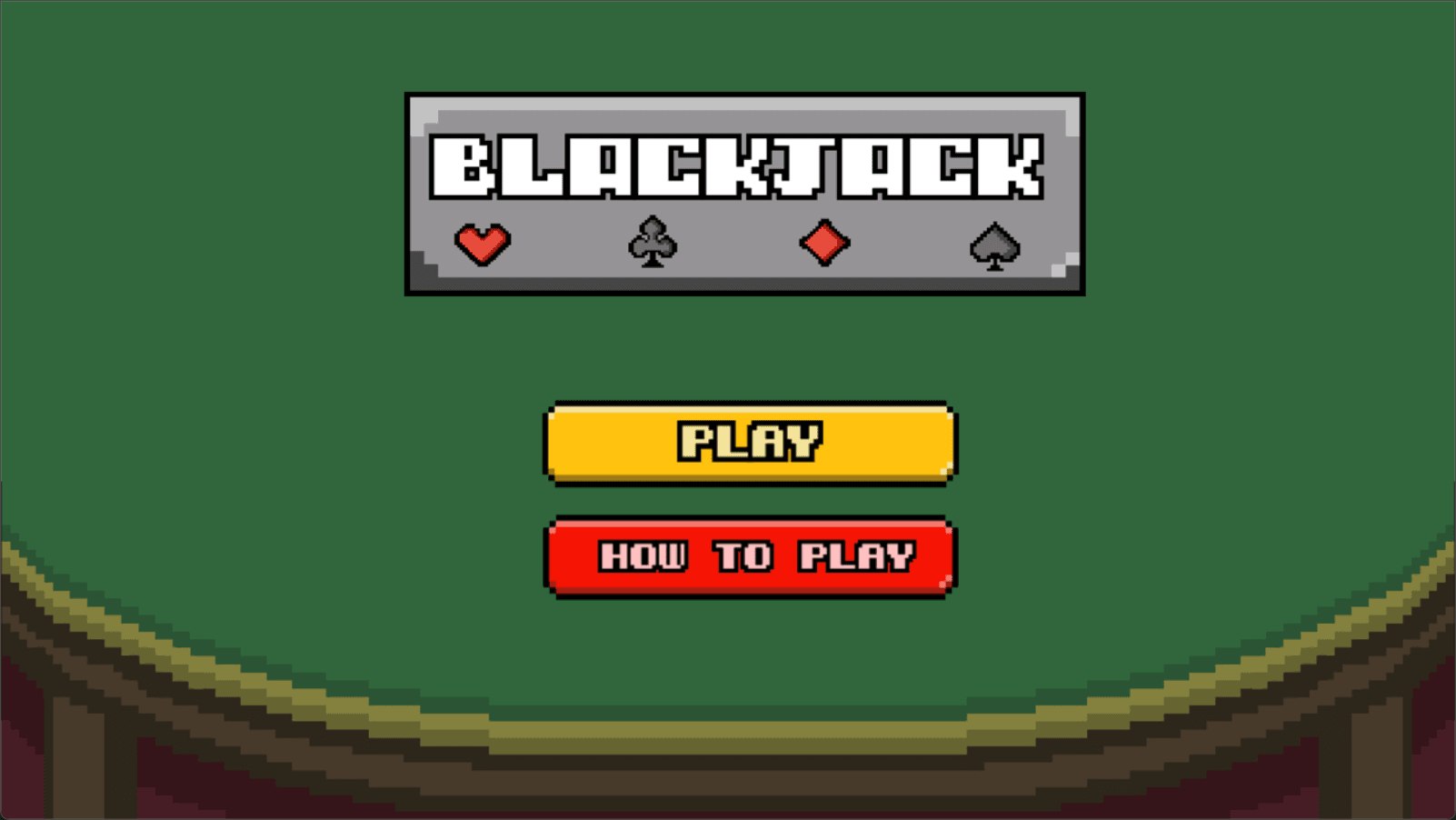
A desktop Blackjack game with custom virtual assets, built to learn OOP Fundamentals.
How It Started
Before jumping into complex full-stack web applications, I needed to master the architectural backbone of clean software engineering: Object-Oriented Programming (OOP). To move past theoretical textbook exercises, I teamed up with a partner for our Object-Oriented Programming class to build HitMe!, an interactive, standalone desktop Blackjack game.
While my teammate focused on sketching and designing custom visual assets from scratch to replace generic playing card graphics, I stepped up to map out the core engineering logic. The goal was simple yet ambitious: translate the chaotic, real-time rules of a casino card game into structured, predictable code, using Python and Tkinter.
Building the System
Moving away from loose procedural scripting, I mapped out the application around distinct entity responsibilities using class encapsulation. By organizing scenes into individual classes inheriting directly from tk.Frame, the game can cleanly swap layout components dynamically without leaking memory or tearing the screen window.
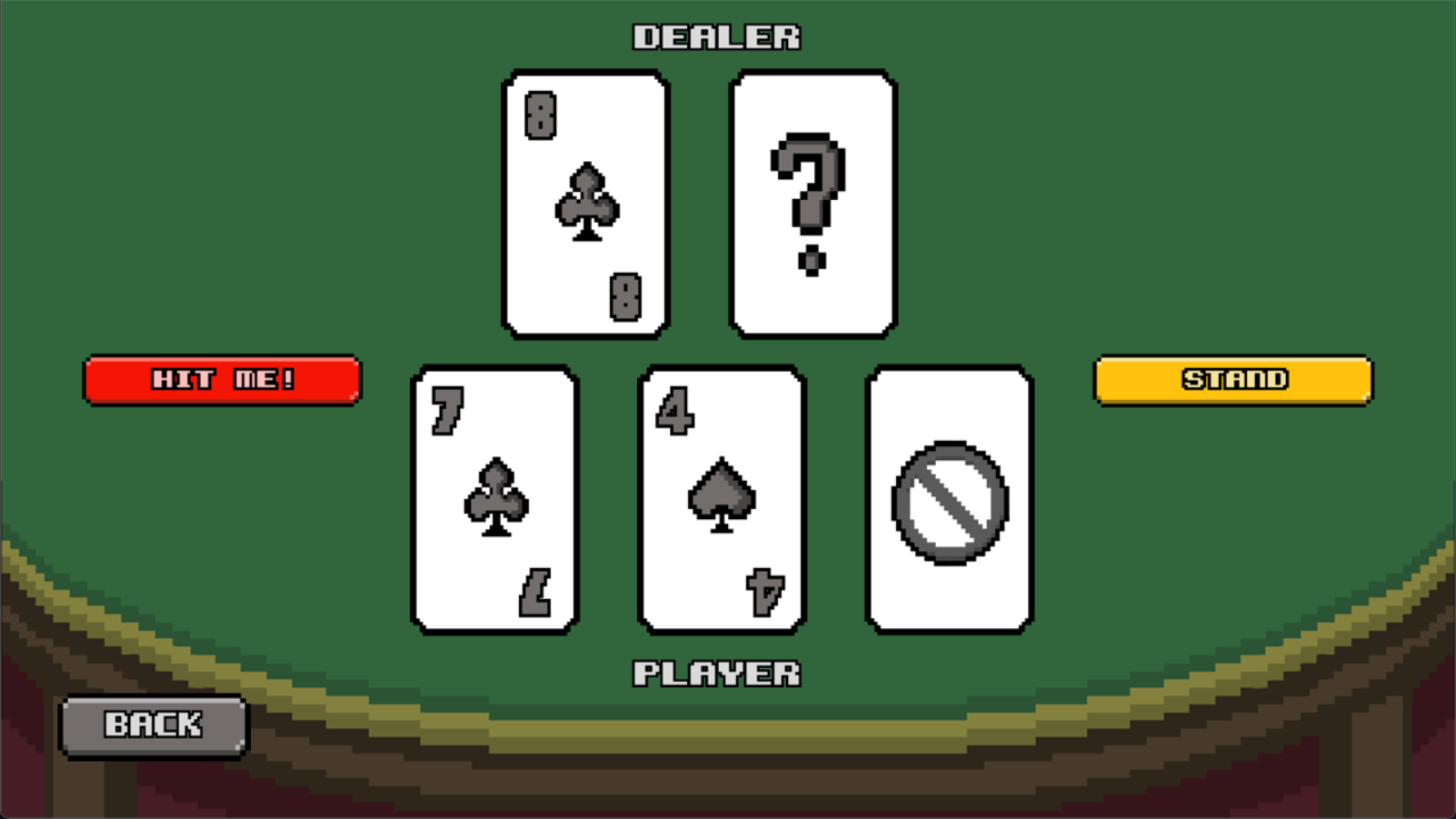
The game engine handles card simulation seamlessly through array tracking. A round begins with a shuffle() method, generating a card deck by looping through four suits and combining them with card values into a clean string representation matrix (e.g., 'J_C' for the Jack of Clubs).
Because card lists contain mixed strings like face card tags and stringified numbers, I implemented check_sum(), which isolates single card tags by using string splitting, loops through active hands, and translates value keywords into point totals.
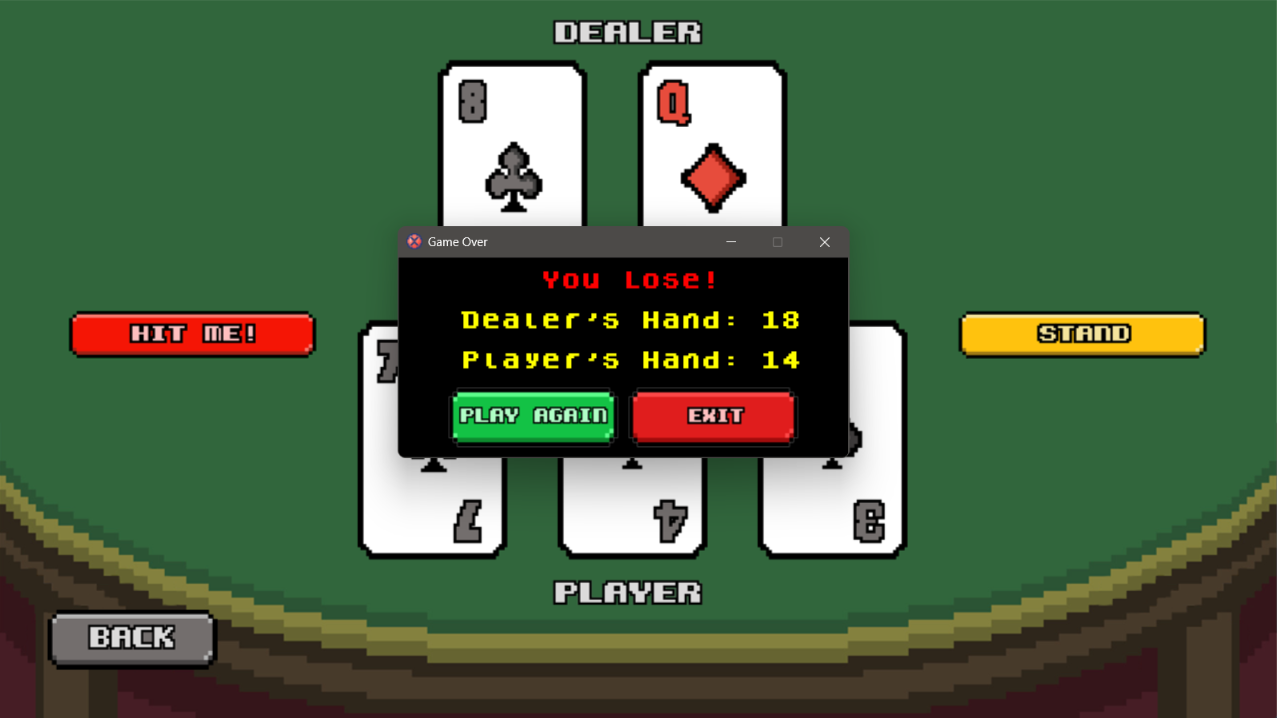
Whenever players execute a hit or stand behavior, the engine evaluates these string values instantly, cross-references player and dealer sums, and triggers a clean, modal tk.Toplevel() Game Over screen tracking the match outcomes.
Key Features
- Complete Blackjack Game Engine built entirely on object-oriented programming principles, simulating authentic card deck shuffling and transaction rules
- String-Based Deck Generation to handle both graphic lookups and underlying game math seamlessly
- Interactive UI Loop complete with responsive game controls, rules screens, and clear win/loss condition updates
- Custom Virtual Assets designed from scratch by teammate for a unique game look
Outcome
HitMe! successfully hit every performance requirement we set out to address. It acted as my first true testing ground for managing a collaborative asset pipeline—proving how separating design creation from data parsing allows developers to write stable systems in parallel without blocking each other.
Looking back at the structural choices, the state mechanics and asset rendering layers are tightly bound together inside single class files. If I were rewriting this game script today, I would extract the core game calculations completely away from the Tkinter GUI frames into isolated helper engines.
Ultimately, this project wasn't just about building a casual card game—it taught me how to map application state onto visual assets under a strict deadline. It provided the vital leap I needed between raw syntax blocks and interactive systems development, preparing me directly for the state-driven application architectures I build now using modern web technologies.